

Knee Conditions

If you are an athlete, or if you work with your arms and hands, your elbows may be at risk for an overuse injury. This is an injury caused by repetitive motions. This type of injury can be a problem for people who play sports such as tennis or baseball. Children also have a higher risk, because their bones are still growing.

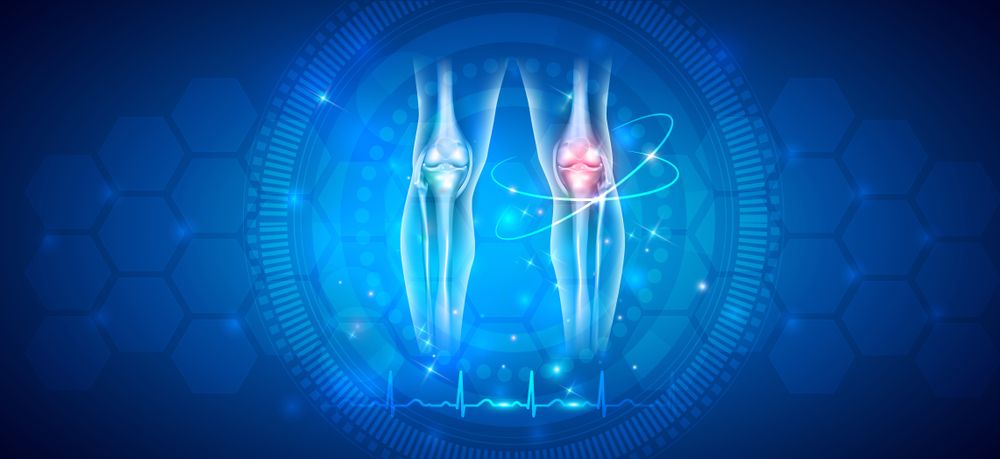
The knee is a complex joint that can flex, extend and twist from side to side. Because of the complexity of movement that it provides and the weight that it bears, the knee joint is vulnerable to injury.

Muscles attach to the bone with tough collagenous cords called tendons. Other collagenous tissue, ligaments, connect the bones to each other and provide stability. A layer of cartilage covers the ends of the bones to provide ease of movement and absorption of shock. Deterioration of articular cartilage results in osteoarthritis, causing pain and stiffness.

Ligaments, cartilage and tendons are composed of collagen, the most abundant protein in the body. The density of collagenous tissue provides strength and stability, but this density also inhibits blood flow. Without adequate supply of healing cells to replenish tissue, collagenous tissue generally does not heal well. Knee injuries may become less painful, but complete healing of the collagenous tissue of the knee is rare. Osteoarthritis is a debilitating condition which is often the result of previous injuries that never quite heal completely. Read more about healing of connective tissue.

Treatment Options

Bone Marrow Aspirate Concentrate (BMAC), also known as Stem Cell Therapy, and Platelet Rich Plasma Injections (PRP) accelerate regeneration of healthy tissue by replacing damaged cells with new cells, helping to strengthen the joint, improve function, and reduce pain. Regenerative procedures inject your own healing cells directly into damaged tissue to enhance repair on a cellular level. Scientific advances in the understanding of how the body actually heals through tissue regeneration provides physicians the knowledge to enhance healing from within, often preventing invasive surgery. Read more

The ability to heal is determined by many factors, some known and some unknown. We do know that when healing is incomplete, tissue damage becomes chronic, leading to arthritis, mechanical dysfunction and harmful stress to adjoining structural areas. BMAC and PRP can help to reduce pain and restore structural function.

Regenerative procedures are designed to help reduce knee pain and improve function with precise highly specific image-guided medical procedures.

Benefits of Regenerative Medicine

Natural Healing

Regenerative Medicine treatments harness the body’s innate healing mechanisms, promoting long-term recovery rather than temporary symptom relief.

Enhanced Tissue Repair

Regenerative Medicine aims to repair and regenerate damaged tissues, potentially restoring function and reducing the need for more invasive treatments.

Reduced Risk of Side Effects

Unlike corticosteroids, regenerative therapies generally have fewer and less severe side effects, as they use natural substances from the patient’s own body.

If you have injured your knee, or if normal wear and tear has caused degeneration of your joint, PRP may help. It uses parts of your own blood to help repair knee damage. It may help you avoid surgery.

Contact Us

Get Treatment for Your Knee Conditions Pain

If you are an athlete, or if you work with your arms and hands, your elbows may be at risk for an overuse injury. This is an injury caused by repetitive motions. This type of injury can be a problem for people who play sports such as tennis or baseball. Children also have a higher risk, because their bones are still growing. Call 817-416-0970 today.

Common Applications

Osteoarthiritis. Osteoarthritis is a degenerative joint disease that erodes the articular cartilage between the bones of the knees. It occurs most often in older people. Lack of protective cartilage results in friction that causes pain, swelling, stiffness, and restricted movement. Common causes include: overweight, excessive strain over prolonged periods of time, previous injury, growth abnormalities, and joint diseases. Regenerative procedures offer an alternative to joint replacement and harmful steroids.

Meniscus & cartilage conditions. The two wedge-shape cartilage pieces between the thighbone and the shinbone are called menisci. Menisci stabilize the knee joint and act as shock absorbers. Meniscus tear is the most common knee injury in athletes. A torn meniscus causes pain, swelling, stiffness, and catching or locking in the knee. PRP is an excellent alternative to arthroscopic surgery. Read more

Ligament and tendon injury. Ligaments and tendons, the connective tissues helping to stabilize the joint, are prone to injury during athletic activity. When stretched, these tissues can develop small micro-tears that are slow and difficult to heal, generally resulting in chronic conditions and arthritis. Because of poor blood supply, collagenous tissue generally does not heal completely. Scar tissue develops rather than healthy, functional tissue. Scar tissue is less elastic than healthy tissue, making the joint more immobile that further affects the structural integrity of the joint. Read more about healing of collagenous tissue.

Other common knee conditions:

  • Osgood-Schlatter disease
  • Patellar tracking Disorder
  • Jumper’s knee
  • Patellofemoral pain syndrome (“Runner’s Knee”)
  • Chondromalacia patella
  • Iliotibial (IT) band syndrome

Understanding the Risks of High-Dose Corticosteroid Injections

The management of pain and inflammation is a critical aspect of patient care in musculoskeletal medicine. High-dose corticosteroid injections have been a mainstay treatment for various conditions such as arthritis, tendonitis, and bursitis. However, while these injections can provide rapid relief, they are not without significant risks. Learn more about the negative effects of cortisone in Dr. Minotti’s blog.

The Downside of High-Dose Corticosteroid Injections

Corticosteroid injections work by reducing inflammation, thereby alleviating pain. However, the use of high-dose corticosteroids comes with several potential adverse effects:

Joint and Tissue Damage: Repeated corticosteroid injections can lead to the weakening of tendons, cartilage, and bone. This can result in joint instability and an increased risk of tendon ruptures.
Osteoporosis: High doses of corticosteroids can accelerate bone loss, increasing the risk of fractures and osteoporosis.
Infection Risk: Corticosteroid Injections can suppress the immune system, potentially leading to infections such as septic arthritis.
Endocrine Disruption: Corticosteroids can interfere with the normal function of the adrenal glands, potentially causing hormonal imbalances and conditions such as Cushing’s syndrome.
Short-Term Relief: While corticosteroids can provide rapid pain relief, this effect is often temporary, necessitating repeated injections and increasing the risk of cumulative damage.

We can help!

To learn more about what we can do to help with your condition, call our office at 817-416-0970. We will thoroughly diagnose your condition and present you with treatment options. From there we will guide you along your road to recovery.

What Are Regenerative Medicine Procedures?

Regenerative medicine offers a transformative approach to treating musculoskeletal conditions by harnessing the body’s natural healing capabilities to give your body a needed boost to help heal naturally, only faster and better. Bone Marrow Aspirate Concentrate (aka Stem Cell therapy) and Platelet Rich Plasma Injections offer a unique alternative to traditional medical interventions, going beyond symptom management to address the root causes of musculoskeletal conditions. For patients struggling with orthopedic injuries, joint arthritis, or other degenerative conditions that cause pain, stem cell therapy offers a non-surgical option that uses the body’s natural healing power to improve function and reduce pain.

Platelet-Rich Plasma (PRP) uses concentrated platelets from your own blood to promote healing and reduce inflammation. Learn More.

Bone Marrow Aspirate Concentrate (BMAC) uses stem cells and growth factors from your bone marrow to support tissue repair and regeneration. Learn More.

The procedure involves injecting a solution, often containing dextrose, into the damaged area. This solution irritates the tissue, triggering the body’s natural healing response and promoting the repair of ligaments and tendons. Learn More.